← Reviens sur :
🧠 The Evil Eye: Myth or Psychological Reality? What Science Says About the Impact of Other People's Gazes

The concept of the evil eye: between collective culture and personal unconscious
Anthropological origins
The evil eye exists in over 40 cultures around the world. It is found in ancient Egypt, ancient Greece, Judaism, Islam, Hinduism, Latin American cultures, and many others. It represents the idea that a jealous gaze can harm a person, causing illness, accidents, or bad luck. According to sociologist Alan Dundes ( The Evil Eye: A Casebook , 1992), this belief is an ancient defense mechanism linked to the anxiety of visible success.
Freud, Jung and the unconscious of the gaze
Freud associated the gaze with the threat of the father as part of the Oedipus complex, a fear of authoritarian judgment. Carl Jung, for his part, saw the evil eye as a manifestation of the "shadow," that is, a repressed part of ourselves that we project into the gaze of others. These interpretations emphasize that the envious eye activates unconscious memories linked to power, shame, or rivalry.
Neuroscience: How our brain reacts to gaze
The gaze, a signal of danger
Dr. Alexander Todorov of the Princeton Neuroscience Institute has shown, through functional MRI studies, that the amygdala (the brain's threat detection center) becomes highly activated when faced with direct gaze. Even if it is neutral, this gaze is interpreted as a possible threat (Todorov et al., Trends in Cognitive Sciences , 2013). The effect is even stronger when the gaze appears disapproving or jealous.

The spotlight effect and social stress
A Stanford study ( Social Cognitive and Affective Neuroscience , 2017) showed that participants exposed to a critical audience saw their cortisol levels increase by 40%. This biological stress triggers a loss of concentration, weakened immunity, and short-term memory problems. The body goes into "defense" mode.
Gaze and motor performance
An experiment at University College London (UCL, 2018) found that participants performed physical tasks more accurately (+12%) under a sympathetic gaze, but saw their performance drop by 18% under a critical gaze ( Journal of Experimental Psychology: Human Perception and Performance ).
Social Psychology: Comparison, Pressure, and Self-Esteem
Passive envy in competitive environments
According to a 2020 Harvard Business School survey, 79% of corporate executives report experiencing invisible tensions, often associated with jealousy or rivalry. This climate causes an impairment of rational decision-making and promotes self-censorship (Fiske et al., The Ambivalent Envy Model , 2020).
Gaze Syndrome and Inner Collapse
According to body language researcher Amy Cuddy (Harvard), being watched reduces our access to our inner resources. Posture tightens, breathing shortens, and our sense of worthiness plummets. ( Presence: Bringing Your Boldest Self to Your Biggest Challenges , 2015).
The Reverse Pygmalion Effect
The Pygmalion effect, demonstrated by Rosenthal and Jacobson (1968), proves that a positive outlook can improve an individual's performance. But its opposite also exists: a contemptuous or skeptical outlook can sabotage results. A study published in the Journal of Educational Psychology (2014) shows that students perceived negatively by their teachers saw their achievement drop by an average of 23%.
The Power of Belief: Placebo, Nocebo, and Intention
The nocebo effect: when the mind turns against itself
Nocebo, the opposite of placebo, refers to the negative effects created by an anxious belief. Knowing you're being envied or criticized can cause insomnia, fatigue, pain, and even minor accidents. A study from the University of Toronto (2015) showed that 65% of participants who believed they were being criticized experienced a drop in energy, and 48% made mistakes or had incidents within 48 hours.
The brain does not differentiate between real and social threat
Dr. Naomi Eisenberger (UCLA) has shown that the same brain regions activate during physical pain and social rejection. The judgmental gaze is therefore coded by the brain as actual aggression ( Science , 2003).
What health professionals say
Chronic social stress and invisible illnesses
According to Dr. Lionel Coudron, founder of the Yogatherapy Institute, living under the constant gaze of others can cause digestive problems, chronic fatigue, and promote inflammation. ( Stress and Yogatherapy , 2018)
The trauma of the gaze
Neuropsychiatrist Boris Cyrulnik reminds us that "a parent's gaze can build or destroy a life." He speaks of invisible emotional wounds, comparable to lasting emotional shocks. ( At Night, I Will Write Suns , 2019)
Psychosomatic disorders linked to social pressure
According to Dr. David Servan-Schreiber ( Guérir , 2003), a significant portion of unexplained pain in general medicine is linked to social stress: rejection, humiliation, loneliness. These ailments rarely have a clear organic origin, but a very concrete emotional origin.

Case studies and current data
In a 2021 IFOP study, 64% of employees said they had experienced jealousy from colleagues. 27% even said they felt a sense of bad luck after a malicious remark or glance.
On social media, Dr. Jean Twenge (San Diego State University) has proven that the stress of digital likes, comments, or criticism is as intense as that of a medical exam ( iGen , 2017).
Among athletes, a study published in the International Journal of Sports Psychology (2019) found a 15% decrease in performance among athletes exposed to negative online comments.
Protect yourself with awareness and style
Protective objects: from symbol to psychological support
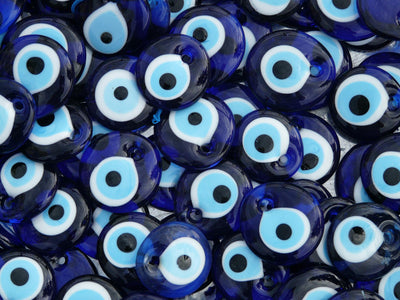
Whether it's a bracelet, a stone, a pendant, or a cap, these objects serve as a reminder. They reactivate our grounding and personal power. They serve as a symbolic barrier against negative energies, triggering internal protective mechanisms.
Affirmations, breathing, and open posture
Studies in body neuroscience (Amy Cuddy, Richard Petty) show that standing up straight, breathing deeply, and affirming a positive thought can limit the paralyzing effect of other people's judgment.
The Ayoun cap: more than an accessory
Carrying an ancestral symbol, a strong message, and a refined style, the Ayoun cap acts as a daily totem. It reinforces the intention of protection, while affirming a free and assertive attitude towards the world.
Conclusion
The evil eye exists, not as a magical curse, but as a powerful mental construct. Our bodies, minds, and emotions react profoundly to the gaze of others. Science now allows us to prove it: social judgment, perceived envy, or silent pressure have a measurable effect on our mental and physical health.
But we also have levers for action. By reconnecting with our inner power, cultivating protective thoughts, and wearing symbols that strengthen us—like Ayoun caps—we give ourselves the ability to neutralize negative energies. It's not magic, it's psychology… and a little style.