← Reviens sur :
🧿 Eye symbol: why our brain has been biologically sensitive to it since the dawn of time
From Paleolithic caves to North African medinas, from Egyptian frescoes to today's caps, the eye is everywhere . Engraved, embroidered, painted, worn... This symbol transcends eras as a universal archetype, a visual language that our brain understands even before words.
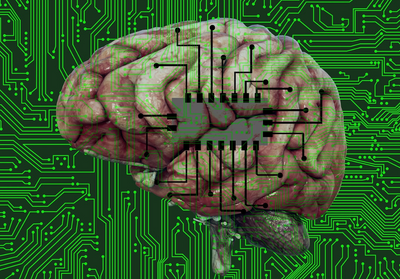
But this fascination isn't merely aesthetic. It's biological. The eye, or rather the gaze, triggers powerful cerebral and emotional responses. What our ancestors sensed, neuroscience now confirms : a stylized eye can activate alertness, reassure, and protect.
And that is the whole point of Ayoun : a brand that re-actualizes this symbolic power in a modern, visible and intentional object. We created the parent page to understand the evil eye phenomenon as a whole.
The eye in human history: an archetype older than writing
Long before religions, long before alphabets, there were already eyes on cave walls. According to research by Dr. Genevieve von Petzinger, an archaeologist at the University of Victoria, the eye is one of the earliest recurring symbolic motifs in cave art, dating back to 30,000 BC.
On the walls of the Chauvet cave in France, there are circles with a central point, interpreted as representations of the eye. On Neolithic tombs, engravings in the shape of an eye adorned the stones, as if to signify a watchful gaze.
From Egypt to Mesopotamia, via Greece, India, the Andes and the Maghreb, the eye appears everywhere.
Eye of Horus, Nazar, Third Eye, Turkish Eye, Baraka… Few symbols are as universal, timeless, and understood by the collective unconscious .
The gaze and the brain: an automatic, immediate, ancestral reaction
Even a stylized image of an eye can alter our behavior. In 2006, researchers at Newcastle University demonstrated that placing an image of an eye above a donation box increased contributions by 278%. Another Harvard study showed that the feeling of being observed influences our moral decisions, postures, and social behaviors .

Why? Because direct eye contact activates several areas of the brain :
The amygdala: it detects the threat
The superior temporal cortex: it follows the direction of gaze
The prefrontal cortex: it triggers social self-evaluation
Dr. Ralph Adolphs, a neuroscientist at Caltech, explains:
"Looks are perceived as an immediate sensory intrusion."
What's fascinating is that even a stylized eye triggers this alert. The symbol doesn't replace real experience… it activates it in our brain .
The protective eye: visual talisman or neuro-emotional strategy?
Why do so many people today wear jewelry, clothing, or accessories with eyes? Is it due to tradition? For aesthetic reasons? Or to unconsciously feel a protective effect?
According to a 2022 IFOP study, 47% of French people believe that a gaze can transmit positive or negative energy. And 31% own an object with a protective eye . This is not insignificant. It's a modern form of protective visual anchoring , inscribed in our biological memory.
Dr. Lisa Feldman Barrett (Harvard) explains that symbols perceived as protective generate reassuring neural predictions. The brain anticipates safety. It relaxes. Cortisol levels decrease. Heart rate variability increases. The symbol acts as a visual but effective placebo.
The HeartMath study: the symbolic eye improves emotional stability
In 2019, the HeartMath Institute conducted a study in which participants had to interact socially under stress. Those who had been exposed to the symbol of a protective eye before the interaction maintained 22% higher heart rate coherence compared to the control group.
In other words: seeing a protective eye helps the nervous system to remain stable .
Another striking fact: MRI studies have shown that this reaction is automatic, whether we believe it or not. The brain recognizes the eye as a fundamental visual code . It reacts.
Ayoun: a contemporary reactivation of the power of the gaze
At Ayoun, we wanted to revive this age-old symbol. But in our own way. Minimalist. Urban. Vibrant.
Our caps don't just display an eye. They combine it with an emotional message . “No Comment,” “Mafi Sorry”… These are modern responses to envy, judgment, and judgmental stares. The symbol has an effect. The message refocuses. The fabric becomes intention.
By carrying Ayoun, you are not saying that you are at war. You are saying that you are awake.
You don't run away from others. You choose what you let pass.
You don't wait until you're weakened to protect yourself. You're already vibrating on a different frequency.
Conclusion: The eye is more than a symbol. It is a biological language.
The eye fascinates because it activates our deep brain. It reassures, it alerts, it protects. And when it is stylized, worn on the body, it becomes an energy filter . A mirror. A signal.
It's no coincidence that it was engraved in stone, drawn on walls, embroidered on fabrics. It's no coincidence that you feel something when you see it.
It's also no coincidence that the Ayoun brand chose it as its founding identity . Because even today, in a world where everything is about image and perception… a symbol can change everything. If you want to know more about the evil eye, we have a blog.